
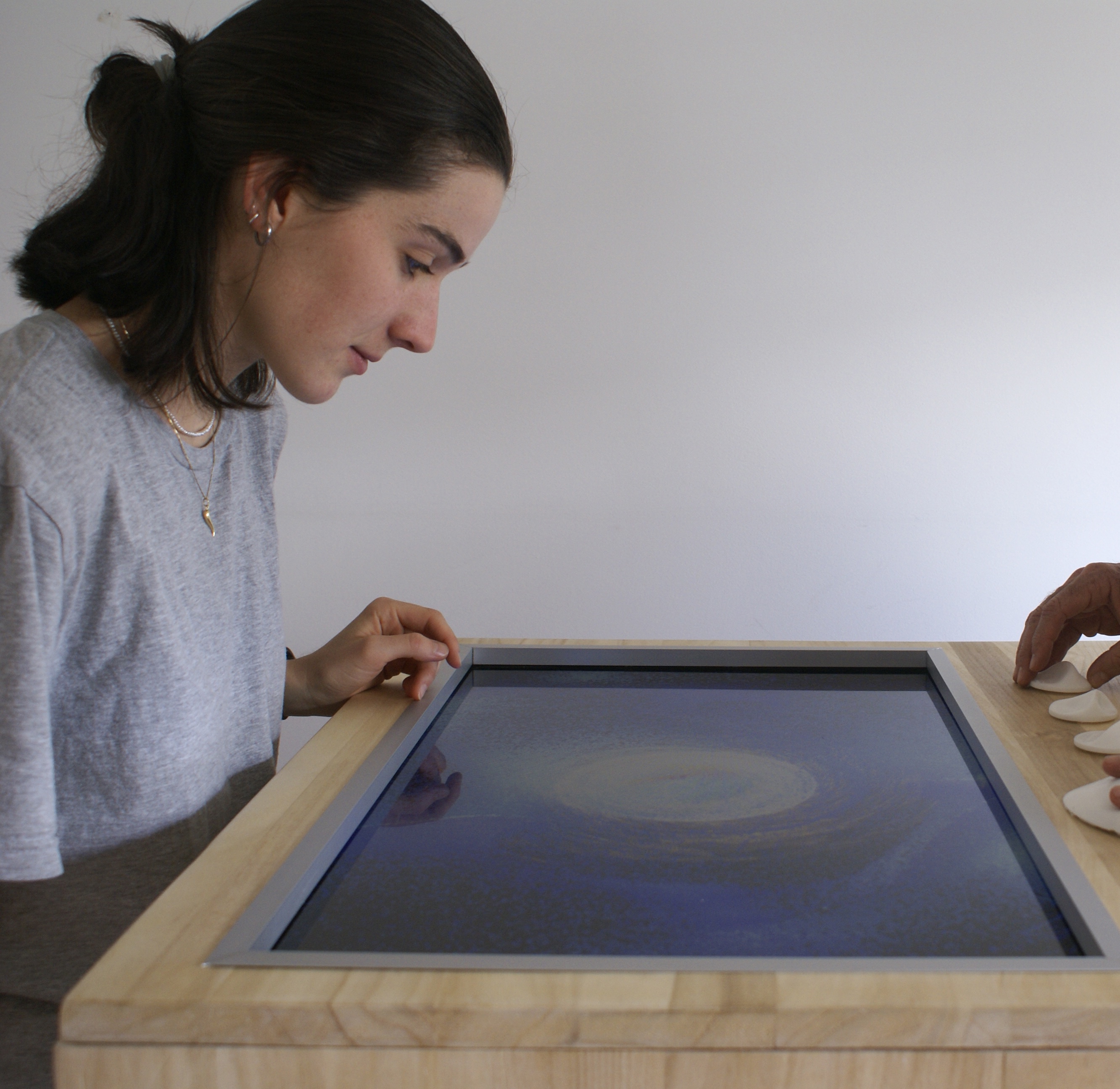
A few weeks ago, I had the immense honor of graduating Summa Cum Laude in my two great passions: Design and Biomedical Engineering, at the Universidad de los Andes. To close this cycle, the Faculty of Architecture and Design (ARQDIS) published a very special piece where I was invited to reflect on my experience.
You can read the full article in spanish here: Why study Architecture or Design at the Universidad de los Andes?
However, reading the article and looking back, I can't help but think about how I got here. The truth is that getting to this point meant walking a path that, at first, I hadn't planned at all.
The Detour That Changed Everything
When I finished high school, I thought I had life figured out. I knew what I wanted to study and where. I started Industrial Design and Social Communication convinced that this was my place, until one class changed how I saw my future.
After four semesters came "Physical Ergonomics for Design," a subject that reconnected me with something I thought I had forgotten: my deep interest in the human body and how it works. Thanks to a professor I still deeply admire, I discovered Biomedical Engineering and realized that everything I loved about medicine, design, and science coexisted there. That same semester I decided to take a leap of faith: I transferred to Uniandes and shortly after began my double major.
The Rush, the Calculus, and Reality
The beginning wasn't easy at all. Coming from another university and having my first Uniandes experience entirely online, I felt immense pressure to move fast and "make up" for the time I felt I had lost. I registered for extra credits and mixed highly demanding courses, without thinking about what it meant to start an engineering degree after more than two years without doing basic calculus.
Reality brought me down to earth fast and hard. In Design Language, I got a grade below 3.0 for the first time, and shortly after, the second Differential Calculus midterm became the worst grade of my university life. The blow was hard. I ended up questioning all my decisions, but in the midst of that crisis, I understood something that would end up defining my time at the university: it wasn't about moving faster, but about finding my own pace. 🤍
Finding the Balance: "One Forgets What It's Like to Live Without Pain"
Over time, I began to enjoy the process and discovered the value of balance. I learned to balance the scientific and the creative, study and leisure, the rush and the calm. I understood that, in an interdisciplinary environment, the high sensitivity I learned to build as a designer allowed me to ground the rational, pragmatic, and investigative nature of engineering.
That comprehensive learning took shape in my graduation design project: “A uno se le olvida lo que es vivir sin dolor” ("One Forgets What It's Like to Live Without Pain"). Chronic pain is a profoundly subjective experience that affects the perception of reality, making empathy with one's surroundings difficult. Faced with the insufficiency of current tools, my proposal sought to communicate pain beyond words or numerical scales. I used design as a tool to generate empathy, creating a visual language capable of making a deeply intimate experience visible.
Today, diploma in hand, I continue to build a path where design, health, and the human experience do not compete with each other, but complement each other. Uniandes design acts as a link, one capable of adapting to other areas of knowledge and enhancing them.
I invite you all to check out the original publication on the ARQDIS portal to learn more about this approach, and above all, to discover the incredible projects with social impact developed by my graduating classmates. Sometimes, the best paths are the ones we don't plan.