
Noap
Category
Biomedical Engineering
Year
2024-1
Software and Tools
AI-based classifier, Noap device.
Significant impact on life quality
Obstructive Sleep Apnea (OSA) is a condition that significantly impacts the quality of life of patients and their surroundings. Although its gold-standard treatment, CPAP (Continuous Positive Airway Pressure), is highly effective, it suffers from low adherence, preventing the full therapeutic effect. Unused devices represent a waste of resources, while the persistence of symptoms and comorbidities leads to higher healthcare costs. It is therefore essential to find ways to increase patient adherence to OSA treatment, reducing resource waste among non-adherent users and targeting the adoption of therapy toward both low- and high-adherence patients.
Obstructive Sleep Apnea (OSA) is a disorder characterized by partial or complete collapse of the upper airway during sleep, leading to intermittent hypoxia, progressive systemic deterioration, and a significant decrease in quality of life. It affects approximately 1 in 7 people worldwide, many of whom remain undiagnosed. The most commonly used treatment is CPAP (Continuous Positive Airway Pressure), which keeps the airway open through a continuous flow of air and significantly reduces apneic events per hour. Despite its clinical effectiveness, CPAP faces a major adherence problem: 8–15% of patients reject it after the first night, and around 50% discontinue use within the first year. This low adherence limits its therapeutic impact and makes treatment follow-up a critical challenge. To understand this issue comprehensively, the full patient journey was analyzed, from symptom recognition and diagnosis to adaptation or abandonment of CPAP. This analysis revealed that adherence is a multifactorial phenomenon involving not only the patient but also their family, specialists, sleep centers, and medical equipment providers. After prescription, patients may successfully adapt and improve their quality of life, or experience discomforts—such as noise, dryness, or congestion—that lead to demotivation and treatment abandonment (in over 50% of cases), prompting them to seek alternative therapies with variable results. This study highlighted a clear need: to develop strategies that increase CPAP adherence, optimize healthcare resources, and provide differentiated support tailored to patients’ varying levels of adaptation.
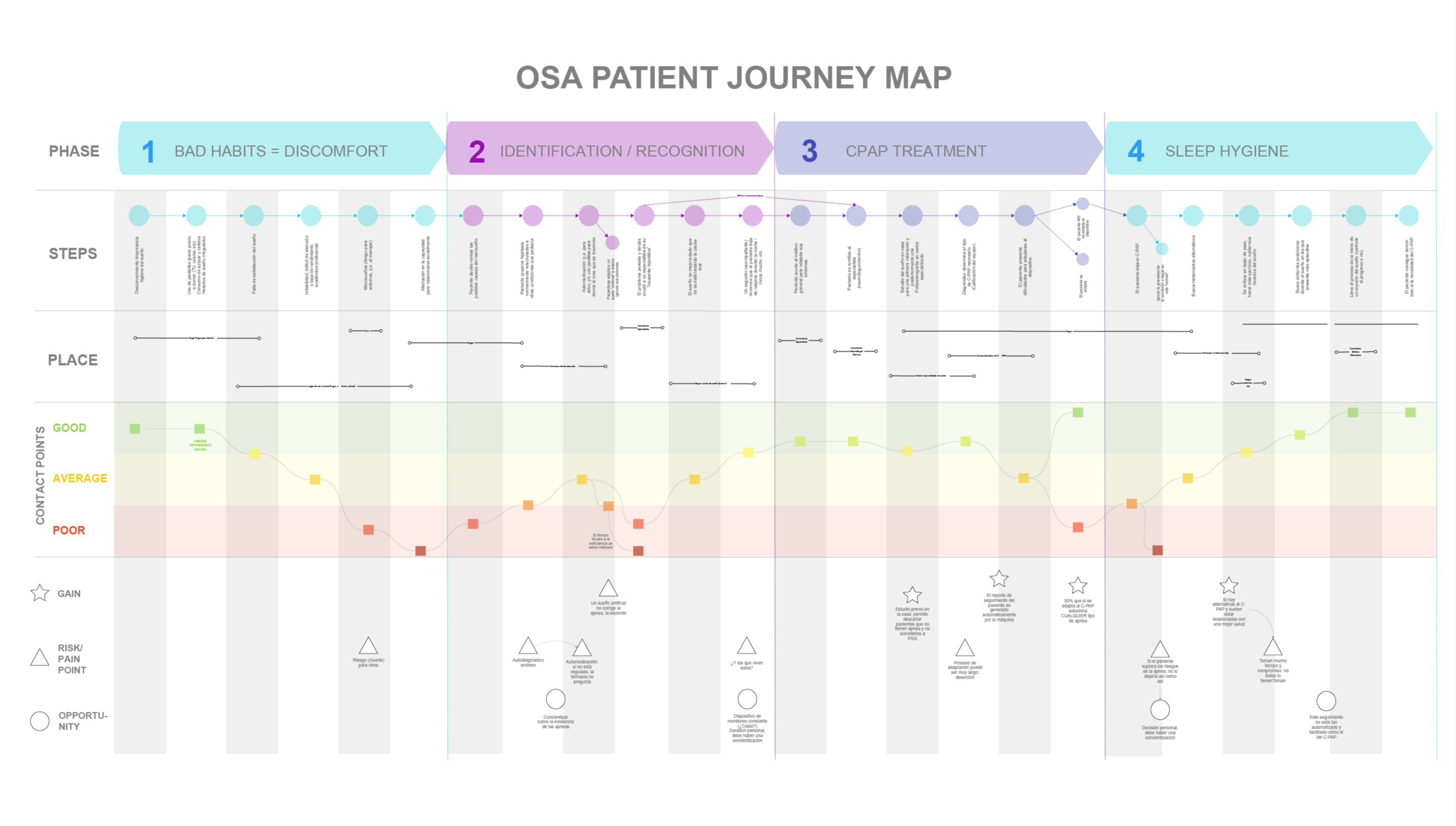
Research revealed that CPAP adherence is not uniform, and that each profile—highly adherent, partially adherent, or non-adherent—requires tailored strategies. This led to the first design specification: the need to identify and predict adherence type early, before investing time and resources in ineffective treatments. Critical factors affecting use were also identified, including emotional barriers (shame, stigma), physical discomforts (noise, pressure, dryness), impacts on partners and bedroom dynamics, and challenges during key moments such as nighttime interruptions. Adherence was recognized as the result of habit formation, requiring integration with the patient’s sleep routine, clear performance feedback, clinical data collection for professional monitoring, and a flexible solution capable of adapting to different contexts and levels of motivation.
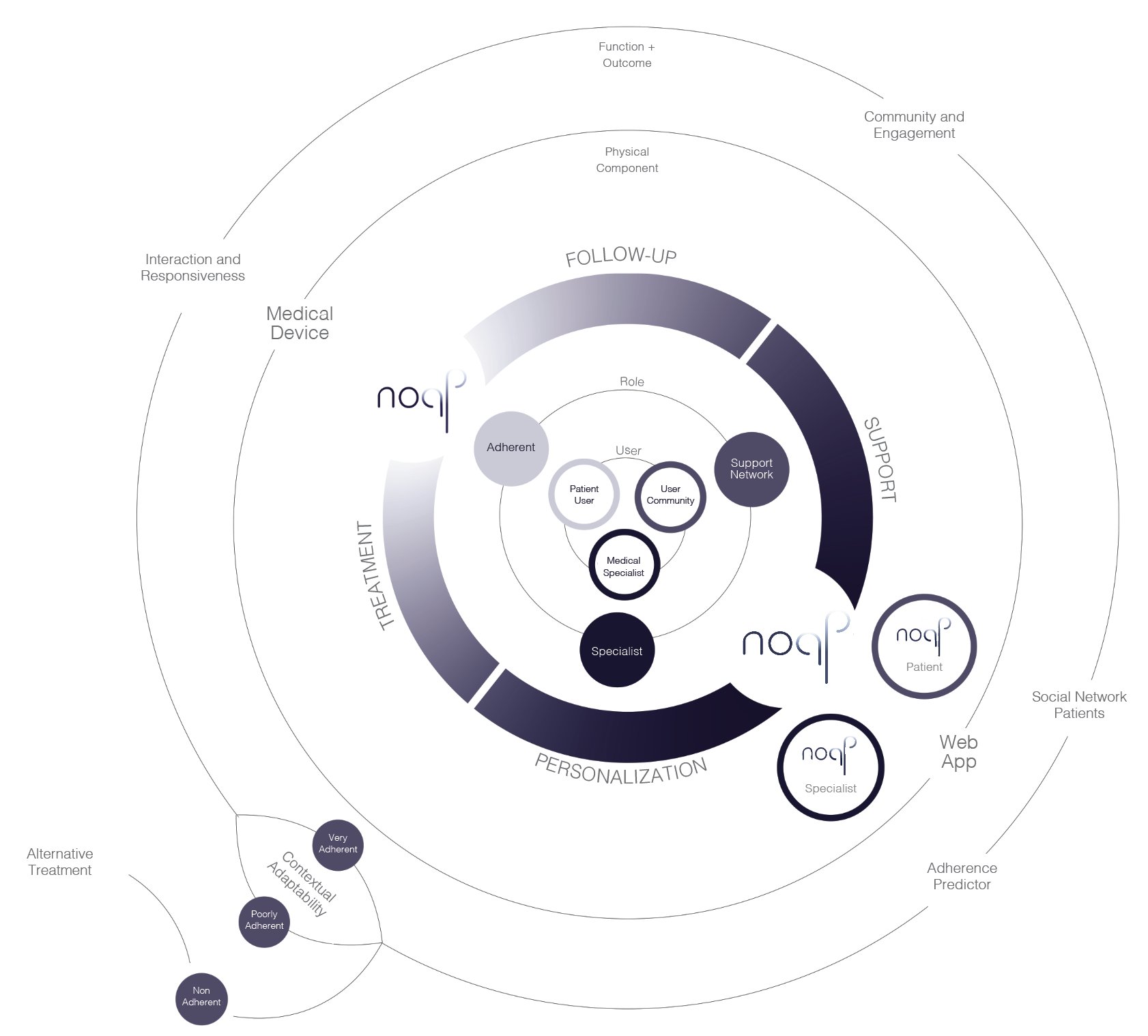
The proposal is called noap, an integrated service composed of three interconnected elements. First, noap specialist, an AI-based classifier that predicts adherence profiles from clinical and sociodemographic data collected after polysomnography and guides therapeutic decision-making. Second, noap device, designed with usability principles and a positive emotional presence, accompanies sleep through subtle light feedback on nightly performance, reintegration strategies such as pressure ramps, and a minimalist aesthetic that blends into the environment. Finally, noap patient, an application that extends support through data tracking, a user support network, and personalized goals that reinforce intrinsic motivation. Together, the system functions as a dynamic cycle of prescription, use, and follow-up, aimed at increasing adherence and optimizing treatment outcomes.